The debate around heart attack vs cardiac arrest confuses millions of Americans each year. Many people think they are the same. They are not. Understanding the difference between a heart attack and sudden cardiac arrest can save a life. Both are life-threatening heart conditions. However, one is a circulatory problem in heart function. The other is an electrical heart problem. This guide explains everything in simple words, so you know exactly what to do during a cardiac emergency.
In the United States, heart disease remains the leading cause of death. According to the Centers for Disease Control and Prevention, hundreds of thousands of people face a myocardial infarction( MI) or an out-of-hospital cardiac arrest each year. Knowing the warning signs and acting promptly improves survival chances with CPR and early treatment.
Difference Between Heart Attack vs Cardiac Arrest
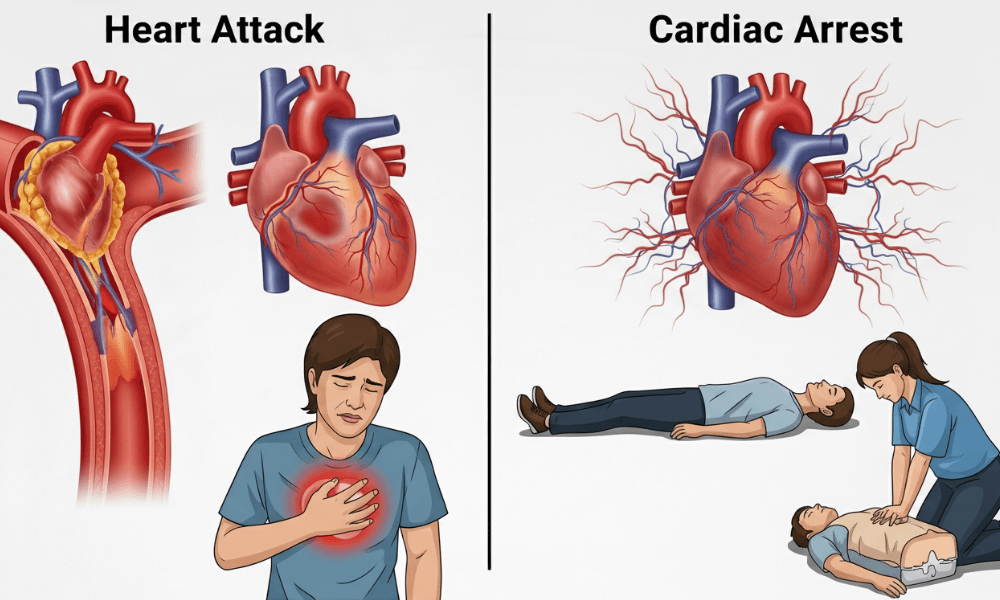
The core issue in heart attack vs cardiac arrest lies in how the heart fails. A heart attack is a heart attack blood flow problem. It happens when a blocked coronary artery stops oxygen-rich blood supply from reaching the heart muscle. This oxygen deprivation to heart tissue causes heart muscle cell death. Doctors call this a myocardial infarction (MI).
Cardiac arrest is different. It is a cardiac arrest problem. An electrical malfunction of the heart rhythm causes a sudden loss of heart function. The heart stops pumping blood to vital organs. This leads to sudden collapse, loss of pulse, and loss of consciousness. Without immediate help, structural brain damage begins within minutes.
| Feature | Heart Attack | Cardiac Arrest |
| Main Problem | Coronary blockage | Electrical system of heart failure |
| Heart Beating? | Usually continues | Stops suddenly |
| Primary Cause | Blood clot in an artery | Ventricular fibrillation or arrhythmia |
| Urgency | Time-sensitive medical emergency | Immediate sudden cardiac collapse |
What Is a Heart Attack?
A heart attack occurs when plaque buildup in the arteries ruptures. A blood clot in an artery forms. This blocks blood flow. The result is coronary artery disease (CAD), leading to tissue damage. It is not always dramatic. Some heart attack symptoms start slowly with chest pain or pressure, tightness in the chest, or indigestion-like pain.
Many Americans ignore early signs. Symptoms may include pain spreading to the jaw or arm, briefness of breath, cold sweat, nausea and vomiting, dizziness, flightiness, or extreme fatigue. Gender differences in heart attack symptoms matter. Symptoms of a heart attack in women often include shoulder blade pain (women), unusual tiredness, and nausea without strong chest pain.
What Is Sudden Cardiac Arrest?
Sudden cardiac arrest happens when an irregular heartbeat (arrhythmia) disrupts the electrical system of the heart. The most dangerous rhythm is ventricular fibrillation. The heart quivers instead of pumping. Blood stops moving. This causes sudden fainting and immediate loss of consciousness.
Sudden cardiac arrest symptoms appear without warning. There is no pulse. There is no breathing. It is often caused by cardiomyopathy, heart failure, congenital heart defects, valvular heart disease, enlarged heart, or structural heart damage. Causes of sudden cardiac arrest in adults often trace back to underlying coronary artery disease.
Heart Attack vs Cardiac Arrest Symptoms Compared
Understanding heart attack vs cardiac arrest symptoms compared helps you react fast. Heart attack symptoms may build over minutes or hours. Cardiac arrest symptoms are instant. One allows time to act. The other demands immediate response.
| Heart Attack Symptoms | Sudden Cardiac Arrest Symptoms |
| Chest pain or pressure | Sudden collapse |
| Tightness in the chest | Loss of pulse |
| Pain spreading to the jaw or arm | Loss of consciousness |
| Shortness of breath | No breathing |
| Cold sweat | Seizures before collapse |
If someone experiences sudden cardiac collapse, do not wait. This is when to call emergency services without hesitation.
Can a Heart Attack Cause Cardiac Arrest?
Yes. Can a heart attack cause cardiac arrest? Absolutely. During severe oxygen deprivation to the heart tissue, the damaged muscle can trigger ventricular fibrillation. This heart rhythm disorder turns a circulation problem into an electrical malfunction of the heart rhythm.
However, not every heart attack leads to cardiac arrest. Quick emergency treatment within 90 minutes lowers the mortality rate of a heart attack dramatically. Still, untreated damage increases the risk of sudden loss of heart function later.
Causes and Risk Factors of Heart Attack and Cardiac Arrest
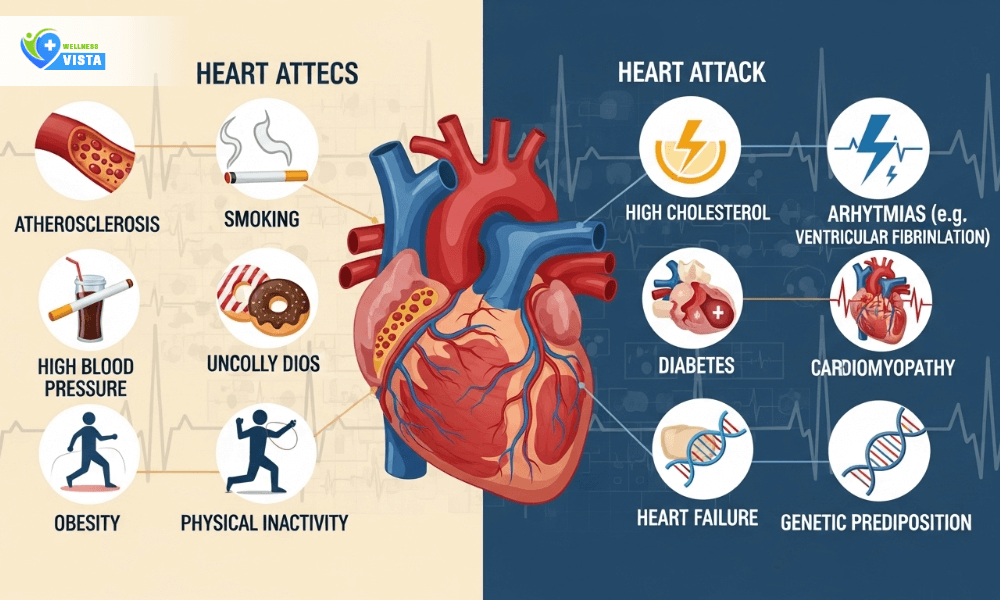
The causes overlap. High cholesterol, high blood pressure, smoking risk factor, obesity, heart disease, and diabetes all raise risk. Coronary blockage from plaque buildup in arteries is the main driver behind heart attacks.
Cardiac arrest threat increases with cardiomyopathy, heart failure, natural heart diseases, and electrical malfunction of the heart meter. Managing cardiac health pitfalls through life change reduces long- term peril. precluding unborn heart problems starts with mindfulness.
What to Do in a Heart Attack Emergency
If you suspect a heart attack, call 911 immediately. Do not drive yourself. Ambulance emergency care begins treatment faster. Emergency medical services (EMS) provide oxygen and medications during transport.
Chew aspirin if not allergic. Stay calm. Sit upright. Monitor symptoms closely. What to do during a heart attack emergency includes watching for worsening signs. If the person becomes unconscious, begin CPR steps for adults until help arrives.
What to Do During Sudden Cardiac Arrest
When facing heart attack vs cardiac arrest, response speed matters most in cardiac arrest. Check for responsiveness. Call the emergency response number. Begin hands-only CPR immediately. How CPR increases survival chances is well documented. Each compression supports brain damage prevention.
Use an automated external defibrillator (AED) as soon as available. Follow AED usage instructions carefully. Early defibrillation saves lives. First aid for cardiac arrest combined with fast defibrillation can triple the survival rate after cardiac arrest, according to the American Heart Association.
Recovery After Heart Attack and Cardiac Arrest
Recovery after a cardiac event takes patience. After a heart attack, cardiac rehabilitation improves strength safely. Doctors guide exercise after a heart attack with gradual activity increase. Many patients follow a heart-healthy diet and low sodium diet alongside medication management.
After cardiac arrest, some patients receive an implanted defibrillator (ICD). Physical activity restrictions may apply early. Emotional recovery is just as important. Post-heart attack depression and anxiety after cardiac arrest are common. Support groups help.
How to Prevent Heart Attack and Sudden Cardiac Arrest
Prevention focuses on life. Stop smoking. Maintain a healthy weight. Control blood pressure. Reduce high cholesterol. Follow a heart-healthy diet rich in vegetables and whole grains. Limit swab. Move daily.
Regular checks detect early warning signs of cardiac arrest and coronary artery disease. Cardiovascular exigency mindfulness in communities improves survival chances. Small diurnal habits cover the oxygen-rich blood force your heart depends on.
Final Thoughts
The discussion of heart attack vs cardiac arrest is not academic. It is practical. One is a circulation crisis. The other is an electrical shutdown. Both demand action. Learn the signs. Act fast. Share this knowledge. It could save someone you love.