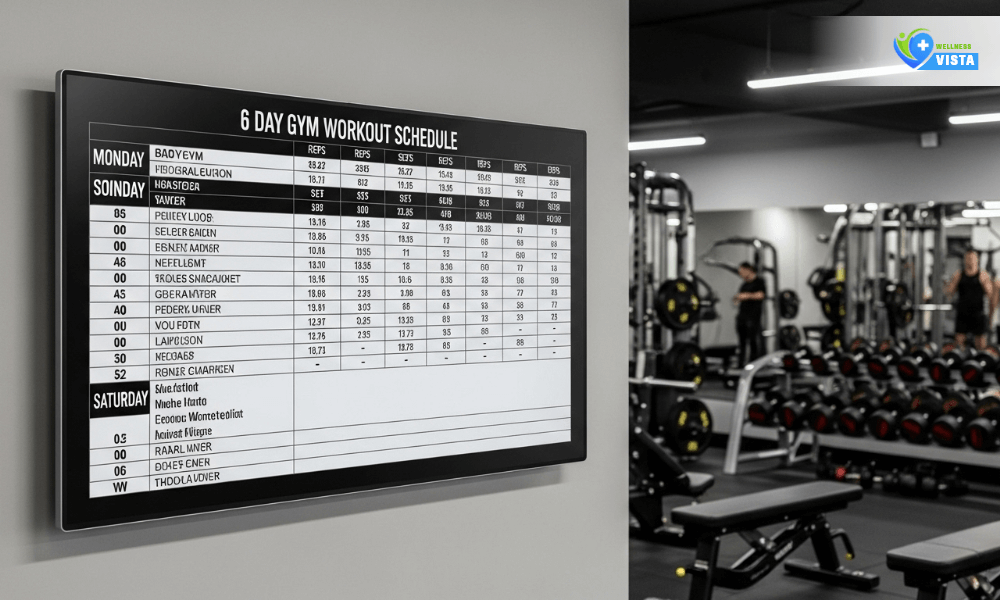
Still, train smarter, not just harder, if you want real results in the spa. A 6 day Gym Workout schedule can boost your strength, make spare muscle, and improve abstinence — if it’s done the right way. Numerous lifters hit the spa six days a week but fail to see progress because their exercises lack structure, recovery, and proper planning.
In this companion, you’ll discover exactly how to structure a 6-day daily routine for maximum results, from muscle group splits and training styles to nutrition, recovery, and staying harmonious. Whether you’re a freshman, intermediate, or advanced lifter, this plan will help you push once mesas and reach your fitness pretensions briskly.
6 Day Gym Schedule and Who Should Follow It?
A 6 day gym workout schedule means training six days each week with one rest or active recovery day. Most lifters use Muscle Group Splits such as a push-pull legs routine, upper-lower split, or 6-day gym split. The goal is to increase lean muscle mass while allowing recovery time between workouts.
This approach works best for intermediate drill routine followers and motivated newcomers who already understand proper form. An advanced trimming program frequently uses a six- day exercise routine to help build muscle mass. Still, if you struggle with staying harmonious in spa sessions, start with a freshman spa drill plan first.
The Science Behind a 6 Day Gym Workout Schedule
Muscle growth happens through micro tears in muscles created by resistance training plan sessions. During the muscle recovery process, your body repairs tissue, leading to muscle repair and growth. This is called muscle hypertrophy. According to the American College of Sports Medicine, training each muscle group twice weekly improves growth potential.
A structured workout routine spread across six days allows progressive overload training without extreme fatigue in one session. For example, a 6-day hypertrophy program increases training volume while controlling overtraining symptoms. That balance helps build strength and endurance while improving workout performance over time.
How to Structure a 6 Day Gym Workout Schedule for Maximum Results
When you learn how to structure a 6-day gym workout, focus on volume, frequency, and recovery. A 6-day training plan should hit each muscle group twice weekly. Many lifters follow a PPL workout split because it balances compound exercises and isolation exercises efficiently.
Your weekly gym workout plan should include strength training program days, hypertrophy training sessions, and one cardio and core training day. Recovery time between workouts must be respected. Otherwise, the 6-day strength training plan with recovery becomes unsustainable.
Below is a simple weekly structure example:
| Day | Focus | Training Style |
| 1 | Push | Chest and triceps workout |
| 2 | Pull | Back and biceps workout |
| 3 | Legs | Leg day routine |
| 4 | Shoulders & Core | Shoulders and abs workout |
| 5 | Weak Points | Isolation + hypertrophy training |
| 6 | Conditioning | HIIT workout routine |
| 7 | Rest | Active recovery workout |
Complete 6 Day Gym Workout Schedule
A 6-day gym schedule with a rest day should follow a push-pull legs 6-day routine for hypertrophy structure. This model improves muscle hypertrophy while reducing overtraining risk. It is considered one of the best 6 day gym workout schedules for muscle gain.
Below is a research-based weekly layout.
Day 1 – Chest & Triceps (Push Focus)
Start with emulsion exercises like the bench press and grade press. Follow with a casket and triceps drill using dips and string extensions. This 6-day bodybuilding daily routine with sets and reps might include 4 sets of 6 – 10 reps for heavy lifts and 3 sets of 10 – 15 reps for isolation exercises.
Day 2 – Back & Biceps (Pull Focus)
A reverse and biceps drill builds range and consistency. Include pull-ups, barbell rows, and ringlets. Progressive load training is crucial, then. Each week, increase reps or weight slightly to ameliorate drill performance.
Day 3 – Legs & Calves
Your leg day routine should include squats, lunges, and Romanian deadlifts. Add calf raises for balance. Lower body strength supports functional fitness training and full-body workout plan performance.
Day 4 – Shoulders & Core
Focus on overhead press and lateral raises. Add cardio and core training, such as planks or hanging leg raises. This day supports posture and stability for heavy compound lifts.
Day 5 – Hypertrophy or Weak Point Training
This session targets lagging muscles. It fits perfectly inside a 6-day muscle-building program. Use moderate weight and high volume to increase lean muscle mass in weak areas.
Day 6 – Conditioning, HIIT, or Functional Strength
Add a HIIT drill routine or circuit training drill. Exertion improves adherence and supports a 6- day drill plan for weight loss and muscle gain.
Day 7 – Rest or Active Recovery
The significance of rest days can not be ignored. Perform inflexibility and mobility work or light cardio. Muscle soreness relief strategies, similar to stretching and hydration, help recovery.
How to Adjust This 6 Day Gym Workout Schedule for Muscle Gain

To maximize a 6 day gym workout schedule for muscle gain, stay in a calorie deficit for muscle gain. Protein input for muscle gain should reach around 0.7 – 1 gram per pound of bodyweight. According to Harvard Health Publishing, acceptable protein supports muscle formation and growth.
Increase total sets gradationally in your 6- day bodybuilding split. Focus on hypertrophy training ranges between 8 and 12 reps. That approach supports muscle hypertrophy without inordinate joint stress.
How to Modify a 6 Day Gym Workout Schedule for Fat Loss
A 6- day drill plan for weight loss and muscle gain should include more cardio and core training. Keep heavy emulsion exercises to maintain strength. Add two short HIIT sessions daily.
Stay in a slight calorie deficiency while maintaining hydration for exercise. Pre-workout nutrition should include complex carbs, and yourpost-workout mess must include protein, healthy fats, and testosterone-supporting nutrients.
Recovery Strategy: The Key to Making a 6 Day Gym Workout Schedule
Many people ask, is a 6- day drill routine too important? The answer depends on recovery habits. Sleep for muscle recovery should reach seven to nine hours nightly. Without it, muscle form and growth decelerate.
Follow injury prevention tips like a proper warm-up routine before lifting and cool-down stretches after training. An active recovery drill improves blood flow and reduces stiffness.
Nutrition Plan to Support Your 6 Day Gym Workout Schedule
A balanced diet for gym performance must include protein, carbohydrates, and healthy fats. Protein builds towels. Carbs, energy, and violent sessions. Healthy fats support hormone health.
Below is a simple macronutrient table example for a 180-pound lifter:
| Nutrient | Daily Target |
| Protein | 150–180g |
| Carbs | 250–350g |
| Fats | 60–80g |
| Water | 3–4 liters |
Hydration for workouts improves strength output and prevents fatigue.
Common Mistakes That Ruin a 6 Day Gym Workout Schedule
Many lifters ignore recovery time between workouts. Others skip flexibility and mobility work. Some increase weight too fast and face overtraining symptoms.
Another common error is not tracking progress. Without data, you cannot prevent muscle plateaus. A customized fitness plan or personal training benefits consultation may help advanced lifters refine structure.
Staying Consistent and Tracking Progress Long-Term
Staying consistent in gym training requires setting fitness goals and building mental strength for fitness habits. Write down weights, reps, and rest times. Track workout progress weekly.
Find a workout accountability partner. Build fitness habits, building systems around routine. Over time, your 6 day gym workout schedule becomes part of your lifestyle, not just a temporary plan.
As legendary coach Arnold Schwarzenegger once said, “The last three or four reps are what make the muscle grow.” Consistency turns effort into results.